
The drone industry is buzzing with new developments, pushing boundaries in both AI and hardware capabilities. Several exciting breakthroughs are reshaping how drones are used across various fields, from environmental monitoring to navigation and AI-driven inspections.
AI-Powered Drones for Multi-Room Inspection
In 2023, Researchers at MIT developed a groundbreaking drone system that allows multiple drones to work together to explore complex indoor environments like multi-room buildings autonomously. Using frontier-based exploration and sensor fusion, these drones can prioritize which rooms to investigate first, improving efficiency by 35% compared to older methods. Drones can focus on critical areas while adapting in real-time to changing layouts, shifting obstacles, or evolving conditions, this advancement in drones and technology is ideal for search and rescue missions or infrastructure inspections.
Navigating by the Stars: Milky Way Sensors for Drones
A fascinating new development in drone navigation is inspired by none other than the dung beetle, an insect that evolved over 130 million years ago. In August 2024, researchers at the University of South Australia developed a Milky Way navigation sensor for drones. This sensor mimics the beetle’s ability to navigate at night using the light of the Milky Way. The Milky Way remains a stable reference point, unlike individual stars, which can blur during motion. The application of this AI-driven sensor could allow drones to perform tasks like nocturnal search-and-rescue operations in low-light environments, ensuring precise navigation even without GPS.
ORNL Power Line Monitoring Drone
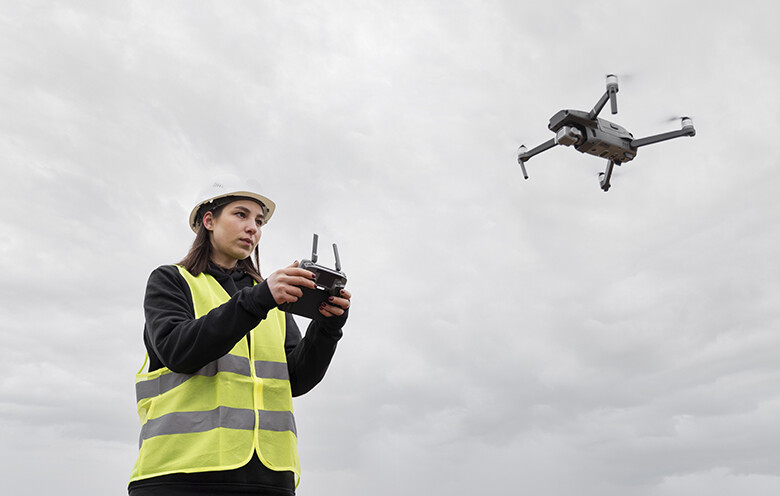
The EPA’s emission-testing drone system, developed by Oak Ridge National Laboratory (ORNL), was demonstrated on August 27, 2024. This technology can detect issues like voltage or current anomalies, triggering drones to assess the situation with video and acoustic sensors. These drones help prevent power outages by identifying problems early, providing a cost-effective alternative to manual inspections. The system was demonstrated at EPB of Chattanooga, highlighting its real-world applicability in preventing infrastructure failures.
Fighting Wildfires with Drones
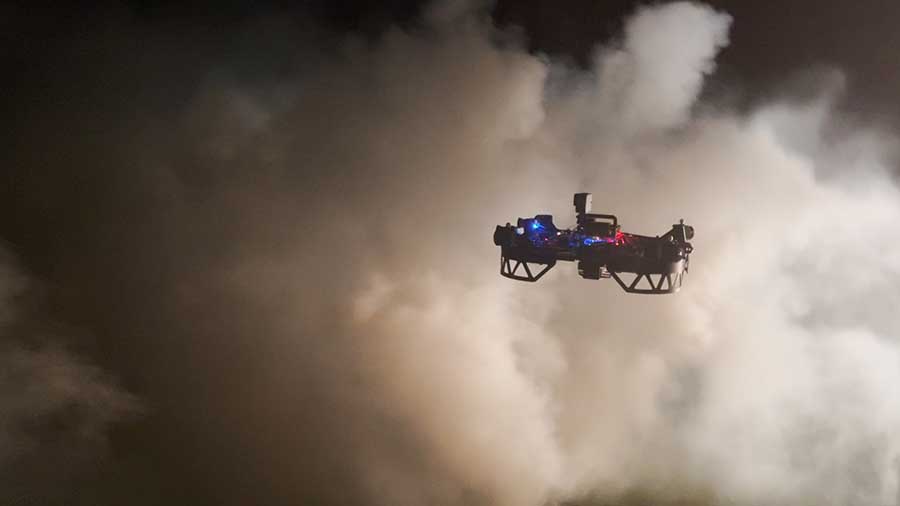
A recent development in drone technology comes from the National Oceanic and Atmospheric Administration (NOAA), which has deployed a specialized drone to gather real-time weather data during active wildfires. This drone, part of NOAA’s Physical Sciences Laboratory based in Boulder, Colorado, was introduced in August 2024. It can fly into hazardous zones and collect crucial data on air pressure, temperature, wind speed, wind direction, and humidity. This real-time information is essential for predicting wildfire behavior and helping firefighting teams respond more effectively.
LocoDrone Pathway: Preparing Students for Drone Careers
At LocoDrone, we believe that these incredible innovations highlight what students can achieve with a strong foundation in drone technology. Our LocoDrone Pathway gives students the tools they need to excel in the world of drones and technology. The pathway starts with foundational skills for younger students, using block coding to engage them with programmable drones and mini drones, then builds toward more advanced applications, such as FAA certification and UAV kit building.
By the time students reach high school, they’re ready to explore AI applications in drones, such as programming autonomous flights with environmental sensors. These hands-on learning experiences mirror real-world innovations, that help students understand how drones can gather data in wildfire conditions or use AI for autonomous navigation.
Prepare your students for the technological leaps of tomorrow with our comprehensive STEM curriculum support, drone kits, and educator resources, the LocoDrone Pathway.
Contact us today to learn how to integrate this forward-thinking pathway into your classroom.